




Upcoming events related to SET.


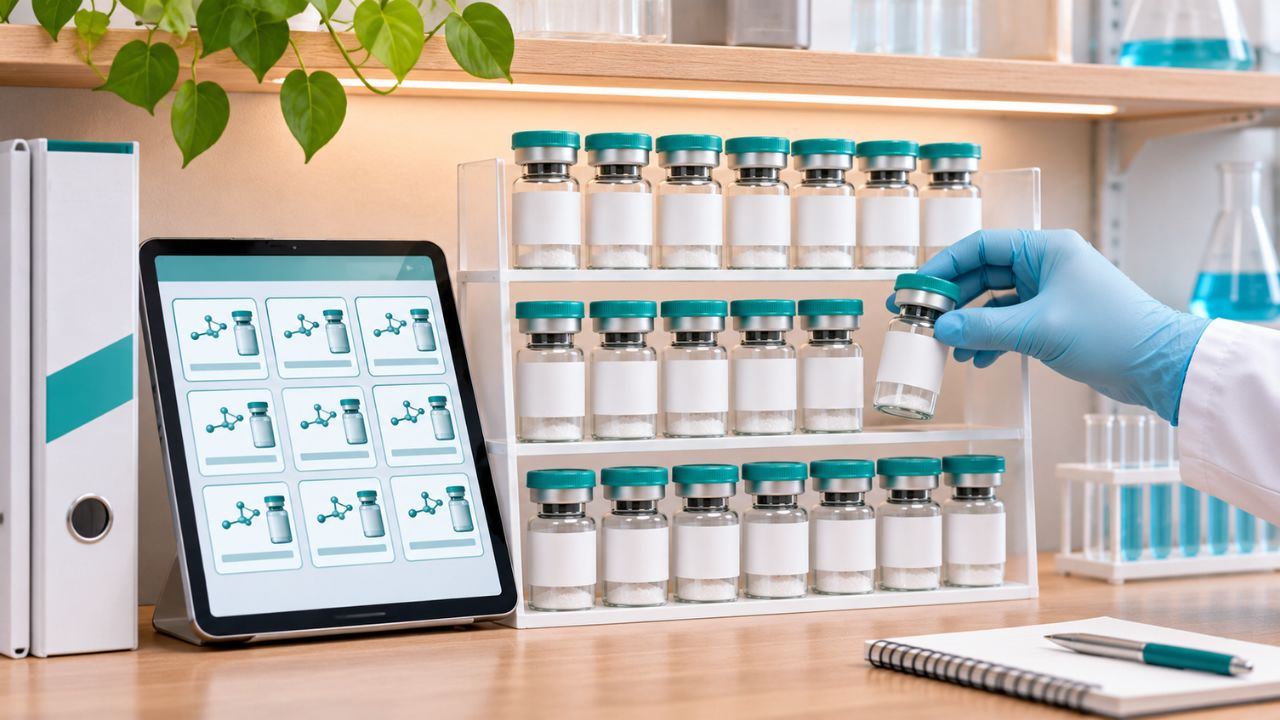
Kovagen Peptides Tested Against Its Own Claims: Lot Numbers, Certificates, and Laboratory Reports
Most online peptide sellers ask you to take their quality claims on trust. Kovagen takes a different route, and its homepage puts the pitch in a short phrase: evidence is the product. The company sells lyophilized research compounds, both single peptides and blends, for laboratory use only, and it says every batch comes with a published third-party certificate. That is a bold promise, so it deserves a closer look than a quick skim of the storefront.
This review checks Kovagen's statements against what its public pages show. We follow a vial from the lot number to the certificate, read what the laboratory reports contain, and look at pricing, shipping, and checkout. We also cover the limits a careful buyer should know about, because a fair review needs them. Everything here concerns laboratory research use only, and nothing in this article is guidance on use in people or animals.
How Lot Numbers Tie Each Vial to a Record
Traceability is the foundation of Kovagen's pitch. A certificate only means something if you can prove it describes the exact vial in front of you, and many suppliers stop at a generic quality statement. Kovagen builds its approach around the lot number. The company states that a certificate belongs to a batch, not to a product name, and the rest of its documentation is arranged to support that idea. Whether the system lives up to it is easiest to judge by following the path a single vial takes.
What Is Printed on the Vial
Each vial carries its batch number, printed alongside the KOVA mark, which is the trading name the operating company, Hybrid Tech Rainbows LLC, uses on its labels. This sounds like a small detail, but it removes a common weak point in the peptide market, where documents often describe a product category rather than the physical material shipped. With the number on the vial, nothing has to be guessed or matched by eye.
The practical benefit is speed. Anyone holding a vial can go straight to the record instead of emailing support and waiting for a PDF. For a laboratory that needs to file documentation with each purchase, that saves real time.
Searching the Certificate Library
The public library can be searched by batch number, and no account is needed. When we reviewed it in November 2026, it held 30 batches, all tested by ILS Laboratories in San Diego, California, with nearly all certificates issued in early August 2026. Naming the testing lab on the record matters, since it gives a reader a real organization to contact.
Not every competitor makes this easy. Two of the other direct sellers we compared hide their prices behind accounts, and one of them also restricts the catalog and its reports. Kovagen's open library lets you judge the paperwork before you spend anything, which is a rare courtesy in this corner of the market.
Verification Links and Review Dates
Each batch page links to the issued PDF and, where available, to the laboratory's own verification portal. That second link is the useful one, because it lets a reader compare the page on Kovagen's site against a record hosted by the lab. A page that only repeats the seller's own claims can never offer that check.
Some batch pages also show a review note. One example records that the page was transcription checked against the lab's PDF on October 18, 2026. It is a modest sign of housekeeping, but it shows someone is comparing the website against the source document instead of simply posting it and moving on.
What the Laboratory Reports Contain
A published certificate is only as useful as the tests behind it. Kovagen advertises a seven panel report on every batch, and a review of the library confirms that each certificate lists all seven entries. That holds across the full set of 30 batches, which is a better consistency record than many sellers can show. The more interesting question is what each entry actually tells you.
The Seven Panels
The certificates cover identity, purity, net content, heavy metals, a fentanyl screen, sterility, and endotoxin. The table below summarizes what each line is meant to show.
Panel |
What It Measures |
Identity |
Whether the material matches the named compound |
HPLC purity |
The share of the sample that is the target peptide |
Net peptide content |
The actual amount of peptide in the vial |
Heavy metals (ICP-MS) |
Trace metal contamination |
Fentanyl screen |
Absence of a specific adulterant |
Sterility (PCR) |
Microbial contamination |
Endotoxin |
Bacterial toxin residue |
The panel is broader than the bare purity number many sellers publish, and it reaches into contamination checks that purity alone cannot reveal.
Identity, Purity, and Content as Separate Lines
Kovagen keeps identity, purity, and net content as separate measurements, and this is a quiet strength. A single high purity figure can hide the fact that a vial contains far less peptide than the label suggests. Splitting the numbers apart lets a reader see each question answered on its own. The company's headline claim is HPLC purity of up to 99.9 percent, and the certificates are where that figure should be verified batch by batch.
The identity method deserves a plain description. Kovagen confirms identity by matching HPLC retention time, and its own Quality page explains that this differs from mass spectrometry. The company is open about that distinction, which is to its credit, but readers who need mass spectrometry confirmation for their work should know it is not what these certificates provide. One seller in the comparison set, Limitless Biotech, states LC-MS identity testing as standard, so the contrast is real.
Reading the Numbers With a Careful Eye
An honest review should also read the certificates as a skeptical customer would. A few details deserve a second look, and they are worth raising with the company directly. Heavy metal results appear identical across many different compounds, and endotoxin reads the same on most of the certificates we compared. That may reflect a pooled test applied to several batches, which would be a legitimate practice if it were explained, but the pattern sits uneasily beside the message that each certificate belongs to a single batch. Two identity labels also look swapped, with a single CJC-1295 No DAC batch and the CJC-1295 and Ipamorelin blend each listing the other's identity text. In the metabolic blend, two of the components show the exact amounts implied by the label ratio, which suggests a calculation from the formulation instead of a direct measurement. None of this disproves the testing, and the open library is the reason these details can be spotted at all. They are good questions to put to the support team before relying on any single record.
Pricing, Shipping, and Checkout
Clear commercial terms are part of trust, and here Kovagen performs well against its peers. Prices are public, checkout does not require an account, and the shipping rules are spelled out in plain language. A customer can calculate the total cost of an order before entering any personal details, which is not true of every seller in this space. The numbers also sit in a reasonable middle band for the category.
Published Prices
Kovagen lists its prices in US dollars per vial, and single items on the homepage range from $55 to $175, with blends covering most of the upper end. The table shows a sample of the listed prices.
Compound |
Size |
Price |
BPC-157 |
10 mg |
$80 |
TB-500 |
10 mg |
$85 |
Ipamorelin |
10 mg |
$75 |
KPV |
10 mg |
$75 |
Tesamorelin |
10 mg |
$110 |
MOTS-c |
20 mg |
$160 |
For comparison, Core Peptides lists BPC-157 between $52 and $97 depending on vial size, so Kovagen sits in line with the market for comparable sizes. Limitless Biotech and Peptidology keep their prices behind accounts, which makes direct comparison harder.
Fulfillment and Delivery Terms
Orders from the United States ship by FedEx 2Day and are dispatched by the next business day once payment clears. Canadian orders ship via FedEx International and typically arrive within 3 to 7 business days, with duties paid by the recipient. Parcels travel at ambient temperature and not on ice, which is worth knowing for planning purposes. Shipping costs $18, and orders of $250 or more after discounts ship free.
Among the direct sellers we compared, Kovagen is the only one that publishes prices, offers guest checkout, and ships to Canada all at once. Core Peptides serves only the United States, and Peptidology covers the United States and Puerto Rico. Limitless Biotech ships worldwide but requires an approved account.
Checkout, Support, and Terms
Checkout works as a guest, with no account and no separate research use checkbox. The terms set the minimum age at 21 and are governed by Wyoming law. The company does not list its accepted payment methods outside the checkout flow, so that detail only becomes visible at the final step.
Support runs through email at [email protected], with replies promised within one business day, and through WhatsApp. The company states that it will not answer questions about human or animal use, dosing, or reconstitution. That boundary is consistent with its laboratory only position, and it keeps the support channel focused on orders and documentation. A partner program also pays 25 percent on a referred customer's first order and 10 percent on repeat orders.
A short list shows what a first order looks like in practice:
- Browse public prices without registering
- Check the batch number against the certificate library
- Pay as a guest at checkout
- Receive a next business day dispatch notice
- Contact support with photos if anything arrives damaged or short
Limitations Worth Weighing Before You Order
No supplier suits every buyer, and Kovagen is no exception. A review that skipped the weaker points would not be worth reading, and the company itself is fairly open about several of them. The sections below cover the areas where competitors currently offer more, so you can decide how much each one matters for your own situation.
Returns and Refunds
All sales are final, with no returns and no refunds. When an order arrives damaged, short, or wrong, Kovagen corrects it after the customer contacts support with photos, and cancellation is possible until the order is dispatched.
That policy is stricter than several rivals. Core Peptides accepts refund requests for up to 30 days after ordering, and Peptidology offers 60 days on unopened product. Buyers who value a generous return window should weigh this directly. The counterpoint is that the policy is stated clearly and in one place, which cannot be said for every competitor, since one rival's own pages contradict each other on refunds.
Catalog Size and Test Depth
The catalog is compact, with roughly 30 listings that include 22 single peptides, 8 blends, and a laboratory supply item. Core Peptides lists 104 products and Peptidology more than 70, so anyone hunting for an unusual compound may need to look elsewhere. A narrow range also means fewer lots to maintain and document, which may explain why the certificate library is so consistently filled in.
Test depth is another comparison point. Peptidology reports 15 tests on each new batch, including residual solvents and trifluoroacetic acid, against Kovagen's seven. For most routine purposes, seven well-documented panels will be enough, but a laboratory with strict requirements may prefer the longer list.
Transparency Gaps
Several background details remain unpublished. The founding year is not public, and the dispatch location is described only as the United States, beyond a postal address in Sheridan, Wyoming. The manufacturing partner is not named, and the claim that the material is made in the USA is Kovagen's own statement. The site also hosts no customer reviews, by stated policy, so there is no outside rating to lean on. These gaps do not damage the paperwork itself, but they leave a few questions that only the company can answer, and a buyer who cares about provenance should send those questions to support before ordering.
A Fair Verdict on Kovagen's Evidence First Approach
Kovagen's strongest case is also the simplest: it lets you check its claims. The lot number on the vial leads to a public certificate, the certificate names an independent laboratory, and the seven-panel layout keeps identity, purity, and content apart. Pair that with public prices, guest checkout, clear shipping terms, and delivery to both the United States and Canada, and it becomes a sound pick for anyone who wants to review the paperwork before placing an order. The same openness cuts both ways, since it lets careful readers spot repeated values and label oddities that deserve an explanation, and the company would do well to address them. The weaker points are equally clear: no returns, a modest catalog, a shorter test list than the deepest competitor, and an unpublished company history. Treat the certificates as documents to read and question, not as a guarantee, and Kovagen offers a transparent, well organized option in a market that does not always reward transparency.
FOLLOW US

Presidency

Secretariat

WiTEC Partners